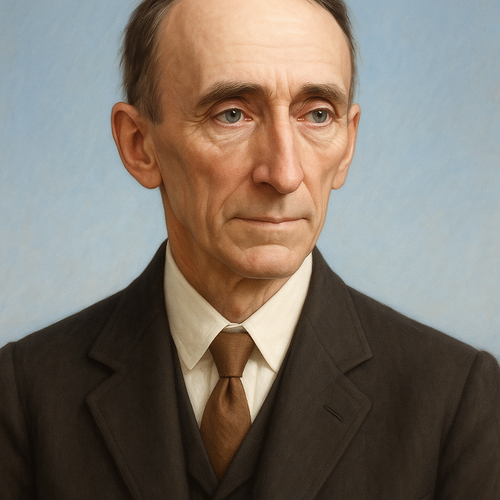
Wallace Delois Wattles (1860–1911) was an American New Thought author whose work laid the philosophical groundwork for the modern prosperity movement. Born in Illinois with little formal education and few material advantages, Wattles spent much of his early life excluded from the wealth and opportunity he would later write about so powerfully. Through deep study of the works of Hegel, Emerson, and the New Thought tradition, he developed a practical, optimistic philosophy that held wealth creation to be a science — a set of principles available to anyone willing to apply them with focus and faith.
His masterwork, The Science of Getting Rich (1910), remains his enduring legacy. Written in clear, direct prose and grounded in what Wattles called "the monistic theory of the cosmos," the book argued that wealth flows naturally to those who align their thoughts and actions with universal creative principles. He encouraged readers not to take his word for it, but to test his methods themselves — a practical, no-nonsense approach that gave his philosophy a credibility rare in metaphysical writing of the era. The book was published just a year before his death, and it is the work for which he is remembered.
Though Wattles passed away at just 51 years old, his influence has only grown. Rhonda Byrne credited The Science of Getting Rich as a direct inspiration for her 2006 phenomenon The Secret, introducing Wattles's ideas to a new generation of millions. Nightingale-Conant has long recognized Wattles as a foundational voice in the personal development canon, offering his programs to listeners who seek the original source behind the modern prosperity movement. His philosophy — timeless, practical, and deeply optimistic — continues to inspire those who believe that success is not a matter of luck, but of principle.

 The Science of Getting Rich IN ACTION