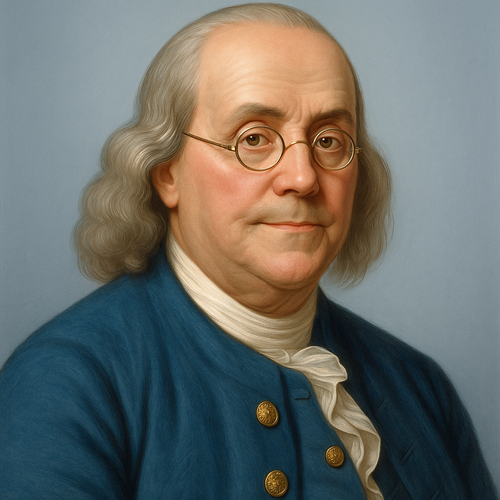
Benjamin Franklin (1706–1790) stands as one of history's greatest exemplars of self-made success — a polymath who rose from humble origins to become a revered statesman, scientist, inventor, and philosopher. Born in Boston to a modest family, Franklin educated himself through relentless reading after his formal schooling ended at age ten. He became a successful printer and newspaper publisher in Philadelphia, building the wealth and reputation that enabled him to pursue his extraordinary range of intellectual and civic ambitions. His life remains the definitive proof that determined individuals can transcend their circumstances through industry, curiosity, and disciplined self-improvement.
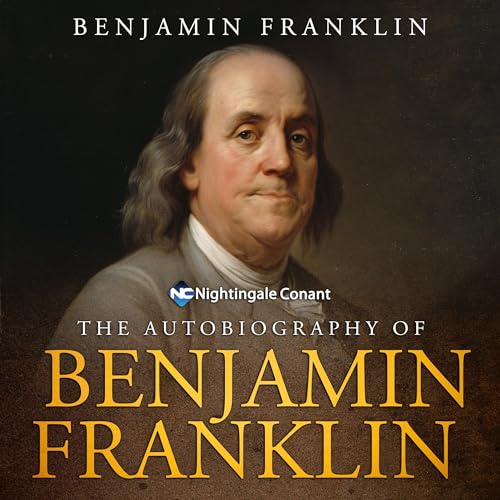
Franklin's literary legacy — particularly Poor Richard's Almanack, published from 1732 under the pen name Richard Saunders — shaped American attitudes toward success and thrift for generations. Selling some ten thousand copies annually, the almanac distilled his pragmatic wisdom into unforgettable aphorisms: "Early to bed and early to rise, makes a man healthy, wealthy, and wise"; "Well done is better than well said"; "An investment in knowledge pays the best interest." These sayings were not mere platitudes but the genuine convictions of a man who had lived them — principles about hard work, frugality, moral virtue, and continuous self-development that he also explored deeply in his celebrated Autobiography, one of the earliest and most influential American success stories ever written.
As a scientist, Franklin revolutionized humanity's understanding of electricity through landmark experiments, invented the lightning rod, charted the Gulf Stream, and gave the world bifocals and the Franklin stove — practical innovations that improved everyday life. As a Founding Father, he was the only person to sign the Declaration of Independence, the Treaty of Paris, and the Constitution. His diplomatic mission to France secured the military alliance that turned the tide of the American Revolution. Franklin's timeless message — that wisdom, virtue, and persistent effort are the foundations of a meaningful and prosperous life — remains as relevant today as it was in the 18th century.